
Generative Engine Optimization (GEO) Guide 2026 | Intelliewrite
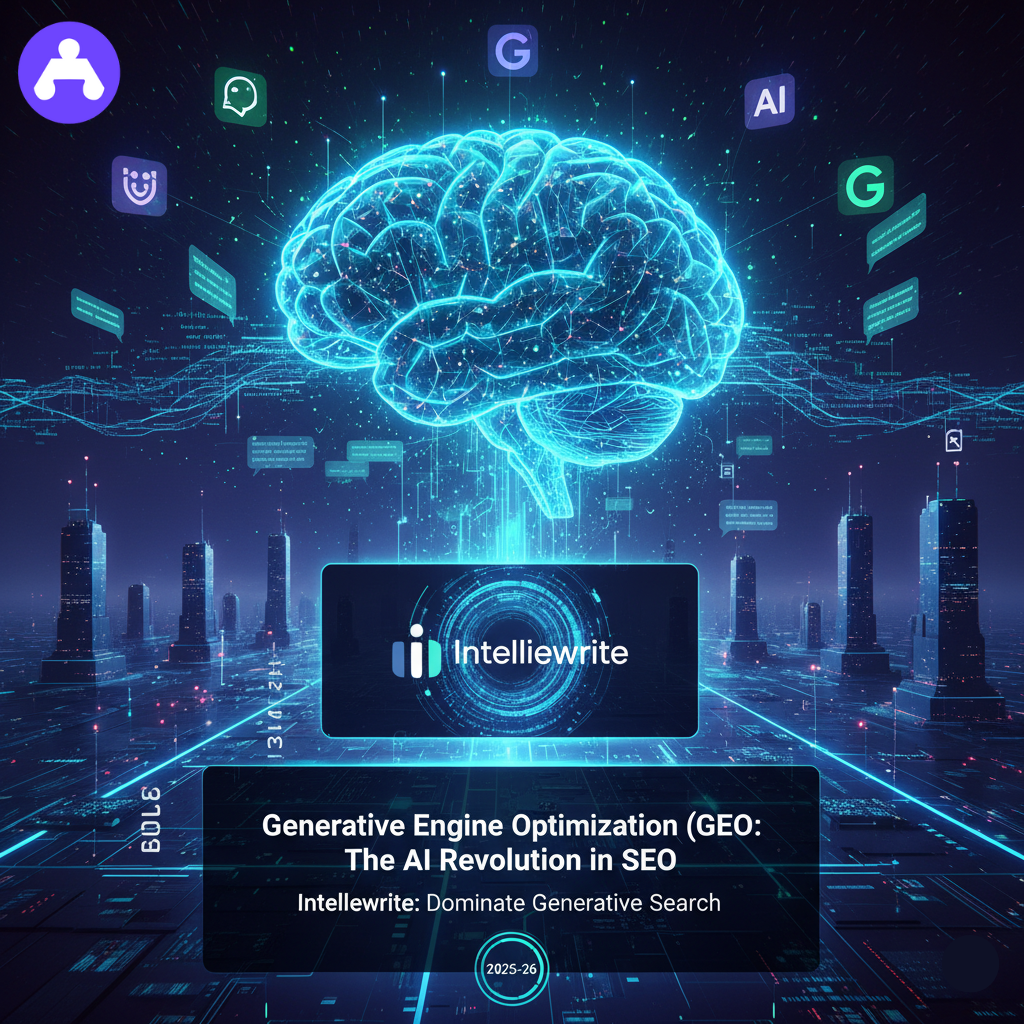
How to Win AI Visibility with Generative Engine Optimization (GEO)
Most businesses still think search is about ranking higher on Google, but search behavior has changed.People are now asking questions directly to tools like ChatGPT, Perplexity, and Google AI Overviews — and getting instant answers without having to open multiple websites.That means your content is no longer competing for clicks alone. It’s competing to become the source AI chooses to reference.If your brand isn’t showing up in those AI-generated answers, you’re losing visibility even if your website ranks well.That’s exactly why GEO matters now.
What is Generative Engine Optimization (GEO)?
It is the process of structuring content so that AI systems can retrieve, understand, and cite it within generated answers.- Being referenced in AI responses
- Providing extractable answers
- Building trust signals for AI models
AI doesn’t list results; it chooses sources.
Being referenced in AI responses
Providing extractable answers
Building trust signals for AI models
Why Generative Search Engine Optimization Matters Now
The shift is not small; it’s massive.- AI-generated answers are replacing clicks
- Click-through rates are dropping significantly
- Users are going directly to LLMs for answers
In fact, AI-driven search is creating a zero-click ecosystem, where visibility comes from being cited, not clicked.This is where tools like Intelliewrite become critical — helping structure content for both SEO and GEO from the start instead of fixing it later.
AI-generated answers are replacing clicks
Click-through rates are dropping significantly
Users are going directly to LLMs for answers
GEO vs SEO vs AEO (Real Difference)
GEO builds on SEO — it doesn’t replace it, but relying on SEO alone is outdated now.
How AI Actually Chooses Content (What Most People Get Wrong)
Most people think AI “searches like Google.” It doesn’t.AI models:- Retrieve multiple sources
- Evaluate clarity and relevance
- Extract key information
- Synthesize into one response
They prefer content that is:- Direct and answer-first
- Structured (lists, tables, headings)
- Fact-based and verifiable
- Context-rich (not keyword-stuffed)
- Easy to summarize
If your content requires interpretation, AI skips it.
Retrieve multiple sources
Evaluate clarity and relevance
Extract key information
Synthesize into one response
Direct and answer-first
Structured (lists, tables, headings)
Fact-based and verifiable
Context-rich (not keyword-stuffed)
Easy to summarize
Example: GEO Optimization in Action
Weak Version (Typical Blog Writing)
“Generative Engine Optimization is becoming important in today’s digital world as AI continues to evolve…”Problem:- vague
- slow
- not extractable
vague
slow
not extractable
GEO-Optimized Version
Generative Engine Optimization (GEO) is the process of optimizing content so that AI systems can cite it in their generated responses.Key elements:- Structured headings
- Clear definitions
- Bullet-point insights
- Supporting data
This is what AI systems actually use.
Structured headings
Clear definitions
Bullet-point insights
Supporting data
Generative Engine Optimization Strategies That Actually Work
1. Answer-first writing
Always start with the answer. AI extracts the first clear definition it finds.
2. Structure for AI readability
Use:- bullet points
- short paragraphs
- tables
- FAQs
AI systems extract structured content more easily.
bullet points
short paragraphs
tables
FAQs
3. Increase fact density
AI prefers:- statistics
- research-backed claims
- real examples
Adding proof increases your chance of being cited.
statistics
research-backed claims
real examples
4. Optimize for conversational intent
AI queries look like:- “What is GEO?”
- “How does GEO improve AI visibility? ”
Not:- “GEO tools”
“What is GEO?”
“How does GEO improve AI visibility? ”
“GEO tools”
5. Construct topical authority
One article isn’t enough to build authority.You need:- cluster content
- internal linking
- consistent topic coverage
This signals authority to both Google and AI systems.
cluster content
internal linking
consistent topic coverage
Generative Engine Optimization Best Practices
If you skip these, don’t expect results:- Clear heading hierarchy (H1 → H2 → H3)
- Short, scannable sections
- FAQ blocks for AI extraction
- Schema markup (JSON-LD)
- Internal linking structure
- Author credibility (E-E-A-T)
AI systems rely heavily on clarity, structure, and trust signals.
Clear heading hierarchy (H1 → H2 → H3)
Short, scannable sections
FAQ blocks for AI extraction
Schema markup (JSON-LD)
Internal linking structure
Author credibility (E-E-A-T)
Best AI Tools for Generative Engine Optimization
Leading Software for AI Visibility and Generative Engine Optimization
- ChatGPT → structuring & ideation
- Perplexity → source-backed research
- Surfer SEO → content optimization
- Frase → semantic coverage
- Intelliewrite → full workflow system
ChatGPT → structuring & ideation
Perplexity → source-backed research
Surfer SEO → content optimization
Frase → semantic coverage
Intelliewrite → full workflow system
Why Intelliewrite Is Different
Most tools solve one part of the problem. Intelliewrite solves the system.It combines:- writing
- editing
- SEO optimization
- workflow management
into a unified platform — helping teams create GEO-ready content from the start, not patch it later.
writing
editing
SEO optimization
workflow management
AI Visibility Solutions with Generative Engine Optimization
To increase AI visibility:- Create structured, answer-focused content
- Add FAQs and schema
- Improve content clarity and depth
- Use entity-based optimization
- Maintain consistent publishing
Platforms like Intelliewrite help automate this process by aligning content with both search intent and AI extraction logic.
Create structured, answer-focused content
Add FAQs and schema
Improve content clarity and depth
Use entity-based optimization
Maintain consistent publishing
What’s the Best Generative Engine Optimization Strategy for AI?
The real answer:Clarity + Structure + Authority + DepthBreakdown:- Clarity → easy for AI to understand
- Structure → easy for AI to extract
- Authority → easy for AI to trust
- Depth → easy for AI to prioritize
Miss one → you lose visibility.
Clarity → easy for AI to understand
Structure → easy for AI to extract
Authority → easy for AI to trust
Depth → easy for AI to prioritize
Advanced: GEO Content Framework (This Is What Most Blogs Miss)
Use this structure for every article:- Direct definition (first 100 words)
- Clear subtopics (H2 sections)
- Structured lists and tables
- Real examples
- Supporting data
- FAQ section
This is how you design content for AI extraction, not just human reading.
Direct definition (first 100 words)
Clear subtopics (H2 sections)
Structured lists and tables
Real examples
Supporting data
FAQ section
How to Measure the Success of Generative Engine Optimization Campaigns
Stop measuring only rankings.Follow these instead:
1. AI visibility
Are you being cited in:- ChatGPT
- Google AI Overviews
- Perplexity
ChatGPT
Google AI Overviews
Perplexity
2. Brand mentions
More GEO success = more branded searches
3. Engagement metrics
- time on page
- scroll depth
- conversion rate
time on page
scroll depth
conversion rate
4. Citation frequency
How often does your content appear in AI answers
Generative Engine Optimization Services
A proper generative engine optimization service includes:- content restructuring
- entity optimization
- AI-first content strategy
- topical authority building
- performance tracking
This is not just SEO — it’s a complete content system redesign.
content restructuring
entity optimization
AI-first content strategy
topical authority building
performance tracking
Common GEO Mistakes (Observed Across Low-Performing Content)
- Writing generic AI explanations without depth
- Ignoring structure optimization
- Overusing keywords instead of clarity
- Lack of factual grounding or examples
- No differentiation from existing GEO content
Writing generic AI explanations without depth
Ignoring structure optimization
Overusing keywords instead of clarity
Lack of factual grounding or examples
No differentiation from existing GEO content
Limitations of GEO (Transparency Note)
GEO is still evolving across AI systems. Behavior may vary depending on:- Model architecture (ChatGPT vs Perplexity vs Google AI)
- Retrieval system updates
- Content freshness and indexing speed
As a result, outcomes are not fully deterministic and may change as AI systems evolve.
Model architecture (ChatGPT vs Perplexity vs Google AI)
Retrieval system updates
Content freshness and indexing speed
Final Perspective
Generative Engine Optimization represents a shift in how digital visibility works:- From rankings → to citations
- From keywords → to meaning
- From traffic → to presence in AI answers
Content that is not structured for AI extraction is increasingly at risk of becoming invisible in AI-first search environments.
From rankings → to citations
From keywords → to meaning
From traffic → to presence in AI answers